
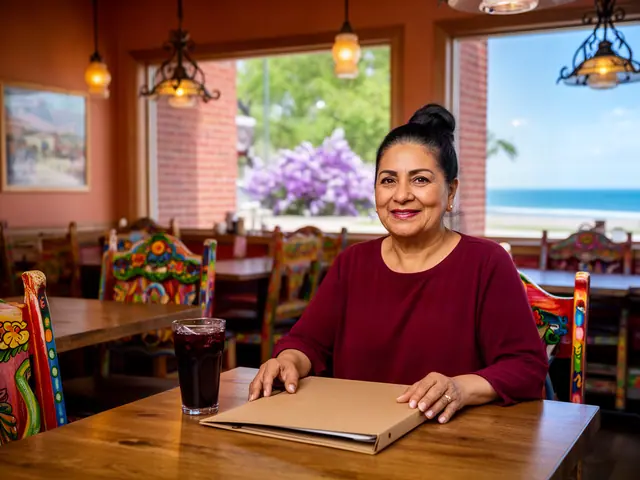
Ravenwood Business Loans of Waukegan, IL arranges restaurant funding through partners for Lake County, IL sit-down and quick-service owners: working capital, lines of credit, equipment financing for coolers, hoods and POS systems, and remodel funding. Partners review each request and make their own decision.
| Full-service restaurants, Lake County, IL | 545 employers (CBP 2023) |
|---|---|
| Limited-service restaurants | 574 employers (CBP 2023) |
| Employees at those 1,119 employers (our sum of both) | 19,860 (CBP 2023) |
| Food-service employers in ZIP 60085 (our sum of both) | 100 (ZBP 2023) |
How restaurant cash moves
Restaurant costs are paid before or as the food is sold: produce and protein deliveries on supplier terms, hourly wages every week or two, rent on the first, and utilities that never pause. Revenue arrives mostly by card and settles after the sale. One slow fortnight, a broken walk-in or a remodel can drain the account faster than sales refill it.
So restaurant requests split into two kinds: short gaps in operating cash, and one-time purchases of equipment or improvements that last years. They call for different funding types.
Counting Lake County, IL kitchens and dining rooms
| Business type (NAICS) | Employer establishments, CBP 2023 | Paid employees, CBP 2023 | Share under 5 employees | ZIP 60085 employers, ZBP 2023 | Nonemployers, NES 2024 |
|---|---|---|---|---|---|
| Full-service restaurants (722511) | 545 | 9,302 | 31.7% | 45 | 95 |
| Limited-service restaurants (722513) | 574 | 10,558 | 27.7% | 55 | 77 |
Employer counts come from County Business Patterns (2023, NAICS 2017) and nonemployer counts from Nonemployer Statistics (2024, NAICS 2022). Different programs, different years: the two columns stay apart and are never summed.
Most restaurant employers here are not tiny: under a third had fewer than five employees, against 61.9% for all Lake County, IL employers (CBP 2023). More staff means a bigger weekly payroll to cover before the week's sales settle.
Restaurant working capital and a restaurant line of credit for thin weeks
For payroll and food costs, working capital covers a single gap, such as a large catering order that has to be staffed and stocked before the client pays. If the gaps repeat, a restaurant line of credit can be drawn in thin weeks and paid down in strong ones, without a new application each time.
Some card-heavy restaurants consider a merchant cash advance, where a partner buys part of future card sales and collects a share of each day's settlements. It is not a loan; compare its total dollar cost with a credit line first.
Walk-in cooler, POS system and kitchen equipment financing
Equipment is the other big category. Equipment financing covers walk-in coolers and freezers, ranges, hoods and fire suppression, dish machines, ice machines and point-of-sale systems. The equipment usually secures the deal, and a seller's quote is the first document a partner wants.
- Walk-in cooler financing: include installation and electrical work in the quote, since an itemized quote is easier for a partner to review.
- POS system financing: hardware can be financed; ongoing software subscriptions are an operating cost, not equipment.
- Used kitchen equipment: financeable, but resale value can drop, so expect a partner to look closely at age and condition.
How to finance a restaurant remodeling without starving the kitchen of cash
A dining-room refresh, a new bar or a kitchen rebuild is a one-time cost that pays off over years, which suits a term loan. Combine it with equipment financing for the appliances, so each piece is matched to its working life. Settle permits and the closure period before you borrow; lost sales while the room is closed are part of the cost.
Illustrative remodel arithmetic (hypothetical)
Say a restaurant closes for three weeks to rebuild its bar. The funding has to cover the contractor, the new equipment and three weeks of rent, insurance and any staff kept on, with no sales coming in. An owner who sizes the request to the contractor's bid alone can come up short in week three. Use your own bid and fixed costs; these are planning steps, not funding figures.
How to finance a food truck business that an existing kitchen launches
A food truck is mostly equipment: the vehicle, the kitchen build and the generator. Equipment financing fits the truck and build-out; working capital or a small line of credit covers the first stock and event fees. Partners may want to see a commissary arrangement and the operator's food-service experience. Ravenwood does not arrange startup funding, so a truck added by an operating restaurant is a stronger request than a brand-new venture.
The restaurant file: what partners read first
- Several months of bank and card-settlement history
- How long the company has traded, plus its revenue band (both on the request form)
- Existing advances or loans with daily or weekly payments
- The lease, for remodels and second locations
- Quotes for any equipment
No partner publishes a single approval threshold. A clear card-processing history helps a partner read a restaurant file.
A second location or a catering kitchen
Growth in food service can mean a second room, a ghost kitchen for delivery, or a commissary for catering. Each is part buildout, part equipment, part opening payroll. Partners reviewing a second site want the first site's card history, the new lease, the buildout bid and a realistic opening date. Splitting the request (term loan for the construction, equipment financing for the kitchen, working capital for the first weeks of staff) can read more clearly than one large number.
Check the new space's permitted use before signing; a former retail unit may need approvals before it can host a kitchen.
Questions to ask before accepting a restaurant offer
- What is the total repaid or collected, not just the payment?
- Are payments daily, weekly or monthly, and do they match when card money settles?
- Is there a penalty or a discount for paying early?
- Does the agreement restrict other financing while it runs?
- What happens if the restaurant closes for a remodel?
Ask each partner the same questions so the offers can be compared line by line.
Related pages
Bars and taverns, grocery stores and food manufacturers are covered briefly on the industries page. County and ZIP figures are on the Waukegan, IL data page, and food-service counts for nearby towns are on each town's page.
By Ravenwood Business Loans · Updated